
14 House Republicans Urge Medicare Advantage Payment Action for Puerto Rico

Updated: Aug 27

Led by Rep. Greg Murphy (R-NC), the proposal calls on HHS and CMS to establish a minimum Medicare Advantage payment floor for Puerto Rico beginning in 2028, comparable to the U.S. Virgin Islands. The request comes as CMS develops the proposed 2028 MA rule and could impact 96% of Medicare beneficiaries on the island—the highest MA participation rate in the nation.
Why it matters: Puerto Rico offers a unique Medicare Advantage case study for federal policymakers: 96% of Medicare-eligible beneficiaries choose MA and 100% are enrolled in plans rated 4.5 stars or higher by CMS, yet payment levels remain approximately 41% below the national average. The congressional request comes at a critical time, as CMS is currently developing the proposed Medicare Advantage rule for 2028, creating an opportunity for the Administration to incorporate this policy change into the upcoming rule. The outcome could also have broader implications for how Medicare Advantage payment policy supports high-performing, high-penetration markets while maintaining program sustainability.


August 3, 2026
The Honorable Robert F. Kennedy, Jr.
Secretary
U.S. Department of Health and Human Services
200 Independence Avenue, SW
Washington, DC 20201
Re: Establishing a National Medicare Advantage Benchmark Floor for Puerto Rico and
Other Disproportionately High-Enrollment Regions
Dear Secretary Kennedy:
We write in strong support of our former colleague and now Governor of Puerto Rico’s request
that the Department of Health and Human Services (HHS) and the Centers for Medicare &
Medicaid Services (CMS) address the longstanding funding shortfalls that continue to undermine
the Medicare Advantage (MA) program in Puerto Rico and other high-enrollment regions
throughout the nation. We appreciate your acknowledgement of the unique challenges faced by
Puerto Rico as evidenced by policies included in the CY 2027 MA Rate Notice and urge you to
consider additional reforms in future rulemaking. Specifically, we urge CMS to protect the
promise of the MA program by exercising its existing statutory authority to administratively
establish a national minimum benchmark floor to ensure that MA payment levels in any region,
especially high MA-penetration regions, do not fall unreasonably below the national average.
Over 670,000 seniors in Puerto Rico— 96% of the Island’s Medicare-eligible population, choose
MA plans, representing the highest MA participation rate in the nation. Yet MA benchmarks in
Puerto Rico remain approximately 41% below the national average, and 20% below those in the
U.S. Virgin Islands, a gap that has been widening annually since 2012. This funding gap is
driven in large part by a benchmark methodology that relies on the claims experience of only
about 29,000 beneficiaries enrolled in both Parts A and B of Original Medicare on the Island
(only 3% of the beneficiaries) — far too small a sample to reflect the cost of a functional
Medicare FFS program.
As a result, MA plans in Puerto Rico face structurally inadequate reimbursement levels that
weaken provider networks, strain the healthcare system, and contribute to the exodus of
healthcare professionals and beneficiaries to the mainland—thereby increasing overall Medicare
expenditures for American taxpayers. Most importantly, it places Puerto Rico’s seniors at a
disadvantage compared to Medicare beneficiaries elsewhere in the United States. Without
corrective action, Puerto Rico will continue to face network instability, provider shortages, and
reduced access to specialty care.
Puerto Rico’s stakeholders are also committed to the highest program integrity standards and
work to eliminate waste, fraud and abuse from both Medicare and Medicaid as responsible
partners and stewards of federal funds.
Funding challenges are further compounded by the fact that nearly half of Puerto Rico’s MA
beneficiaries are dually eligible for Medicare and Medicaid, yet the Island lacks access to key
federal low-income support programs available in the States. These include the Medicare
Savings Program (MSP), Long-Term Services and Supports (LTSS), Supplemental Security
Income (SSI), and the Supplemental Nutrition Assistance Program (SNAP). A stable and
adequately funded MA program is essential to help fill these gaps and protect access to high
quality care for low-income American seniors residing in Puerto Rico.
To address this funding gap, we respectfully recommend, within all applicable rules and
regulations, that CMS establish for 2028 a National Minimum MA Payment Level. Using its
existing authority under Section 1876(a)(4) of the Social Security Act, CMS should consider
setting a national benchmark floor at 70% of the national average, consistent with
benchmark levels currently observed in the U.S. Virgin Islands.
This policy adjustment would stabilize provider payments, strengthen healthcare infrastructure,
and support chronic care management for low-income seniors—particularly in Puerto Rico.
Correcting this funding gap is not a special benefit, but a necessary reform to promote fairness,
quality, and efficiency within the Medicare program from the National perspective.
Thank you for your attention to this important issue and for your continued commitment to
ensuring equitable healthcare access for all Americans.
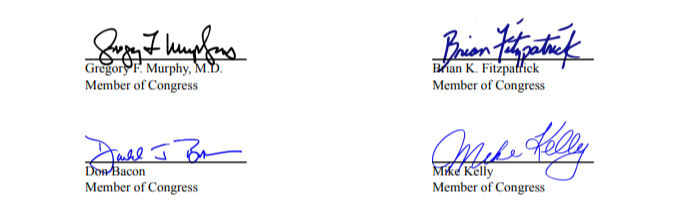
Sincerely,



Comments